

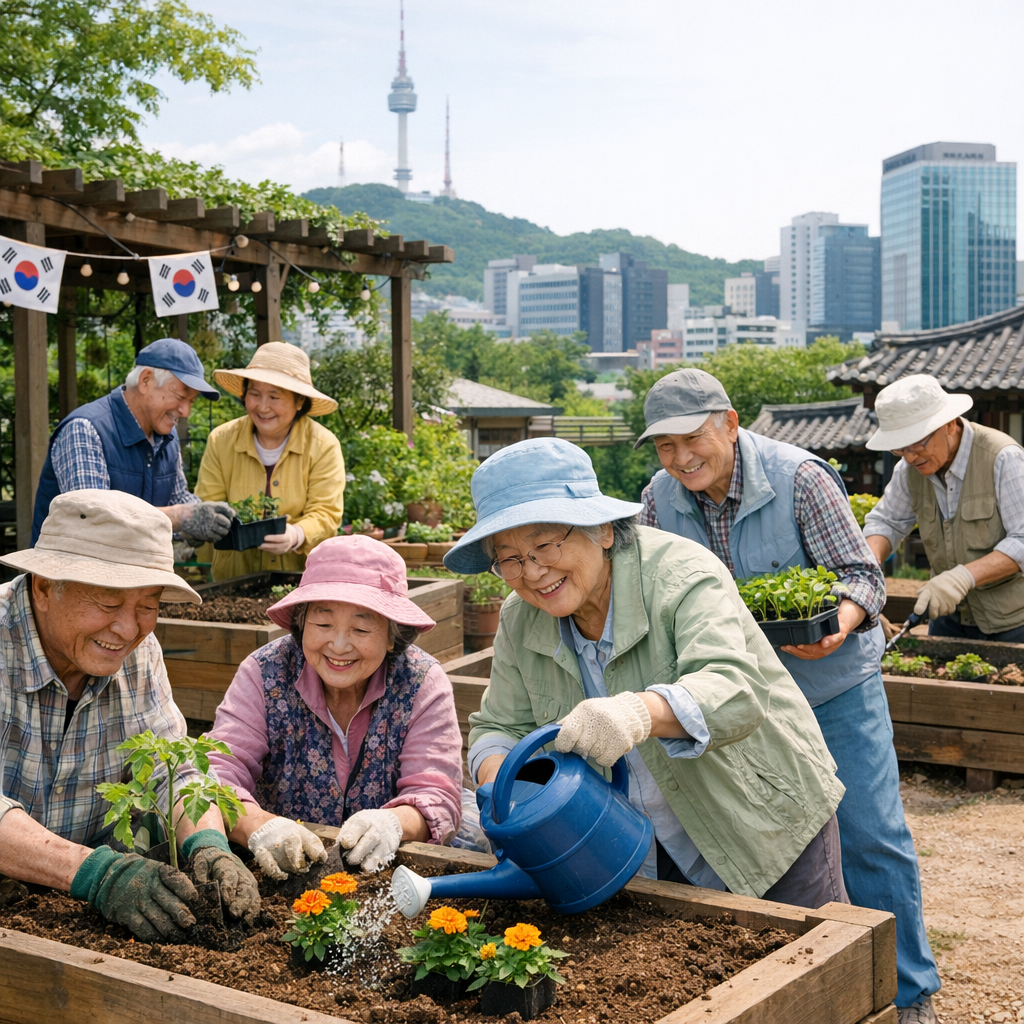
Seoul is actively implementing various community initiatives to enhance the well-being of its elderly population. These programs aim to provide comprehensive care, promote social inclusion, and utilize technology to support seniors in leading fulfilling lives.
Integrated Care Services
The Seoul Metropolitan Government has introduced the ‘Seoul-style Integrated Care Service,’ offering 58 integrated services across healthcare, health management, long-term care, daily care, and housing. This initiative enables elderly and disabled residents to receive care in their own homes, reducing the need for institutionalization. Source
Community Engagement through Gardening
In Seongdong-gu, the ‘Seongdong Care Farm’ program engages elderly individuals living alone in communal gardening activities. Participants cultivate community gardens, which has been shown to alleviate depression and prevent dementia by promoting serotonin secretion. The program also fosters intergenerational exchange by involving youth volunteers, helping to reduce social isolation among seniors. Source
Leisure and Cultural Hubs
Recognizing the evolving needs of the ‘young old’ demographic, Seoul plans to invest approximately $150 million through 2032 to establish ‘Vitality Recharge Centers’ and ‘Vitality Recharge Stations.’ These facilities will offer leisure, health, and digital experiences, encouraging seniors to engage in activities outside their homes and promoting active aging. Source
Technological Support for Elderly Care
Seoul is incorporating advanced technologies such as AI and robotics into elderly care services. Initiatives include distributing companion robot dogs to provide mental and physical support for seniors living alone and implementing AI-based care and rehabilitation robots in nursing homes. These technologies aim to enhance the quality of care and ensure the safety of elderly residents. Source
Employment Opportunities for Middle-Aged Residents
The ‘Middle-Aged Value Co-Work Jobs’ program targets residents aged 40 to 67, offering positions in public, educational, and welfare sectors. Participants are placed in roles such as school safety guidance and support for welfare facility operations, allowing them to contribute to the community while engaging in meaningful work. Source
These initiatives reflect Seoul’s commitment to creating an inclusive and supportive environment for its aging population, ensuring that seniors can lead active, healthy, and socially connected lives within their communities.