

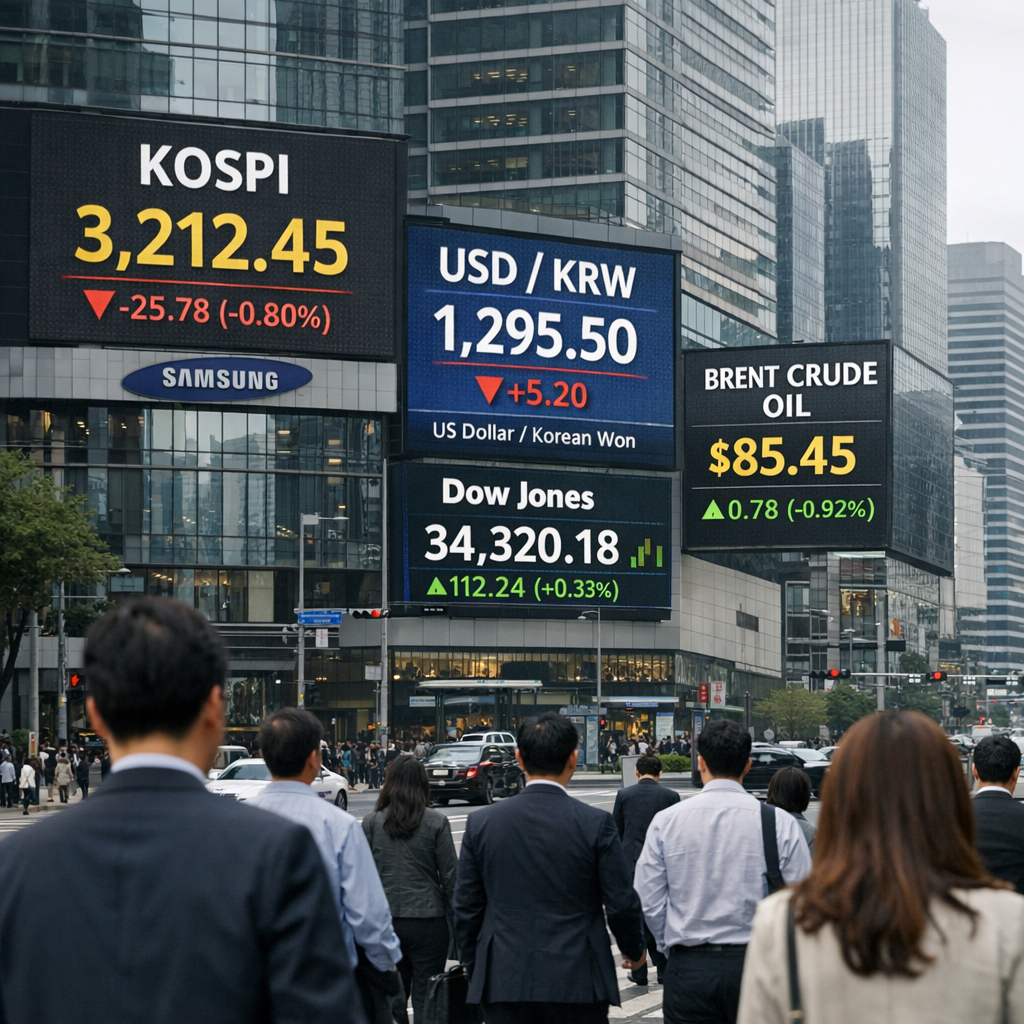
The global economic landscape is undergoing significant transformations, influenced by geopolitical tensions and technological advancements. These changes have profound implications for economies worldwide, including South Korea.
Middle East Conflict and Energy Prices
The ongoing conflict in the Middle East has led to disruptions in energy production and trade, resulting in an energy shock that is driving inflationary pressures and adversely impacting global growth. The OECD’s latest Economic Outlook highlights that the evolving conflict has become the dominant force shaping global economic prospects, with potential adverse impacts on growth due to rising energy prices and inflationary pressures. This situation poses challenges for South Korea, which relies heavily on energy imports from the Middle East.
Global Economic Growth Projections
Despite these challenges, the global economy has shown resilience. The World Bank’s latest Global Economic Prospects report indicates that global growth is projected to remain broadly steady over the next two years, easing to 2.6% in 2026 before rising to 2.7% in 2027. This resilience reflects better-than-expected growth, especially in the United States, which accounts for about two-thirds of the upward revision to the forecast in 2026. However, the report also notes that the 2020s are on track to be the weakest decade for global growth since the 1960s, highlighting the need for proactive economic strategies.
Technological Advancements and AI
Technological advancements, particularly in artificial intelligence (AI), are playing a crucial role in shaping the global economic outlook. Morgan Stanley’s 2026 Economic Outlook emphasizes that U.S. consumer spending and capital expenditures on AI are likely to drive moderate growth as global inflation slows. This trend underscores the importance of investing in AI and related technologies to bolster economic growth and competitiveness.
Implications for South Korea
For South Korea, these global trends present both challenges and opportunities. The country’s heavy reliance on energy imports makes it vulnerable to fluctuations in global energy prices. Additionally, the rapid advancement of AI and other technologies necessitates strategic investments to maintain competitiveness in the global market. Policymakers and businesses must navigate these complexities by diversifying energy sources, investing in technological innovation, and fostering economic resilience to adapt to the evolving global economic landscape.