

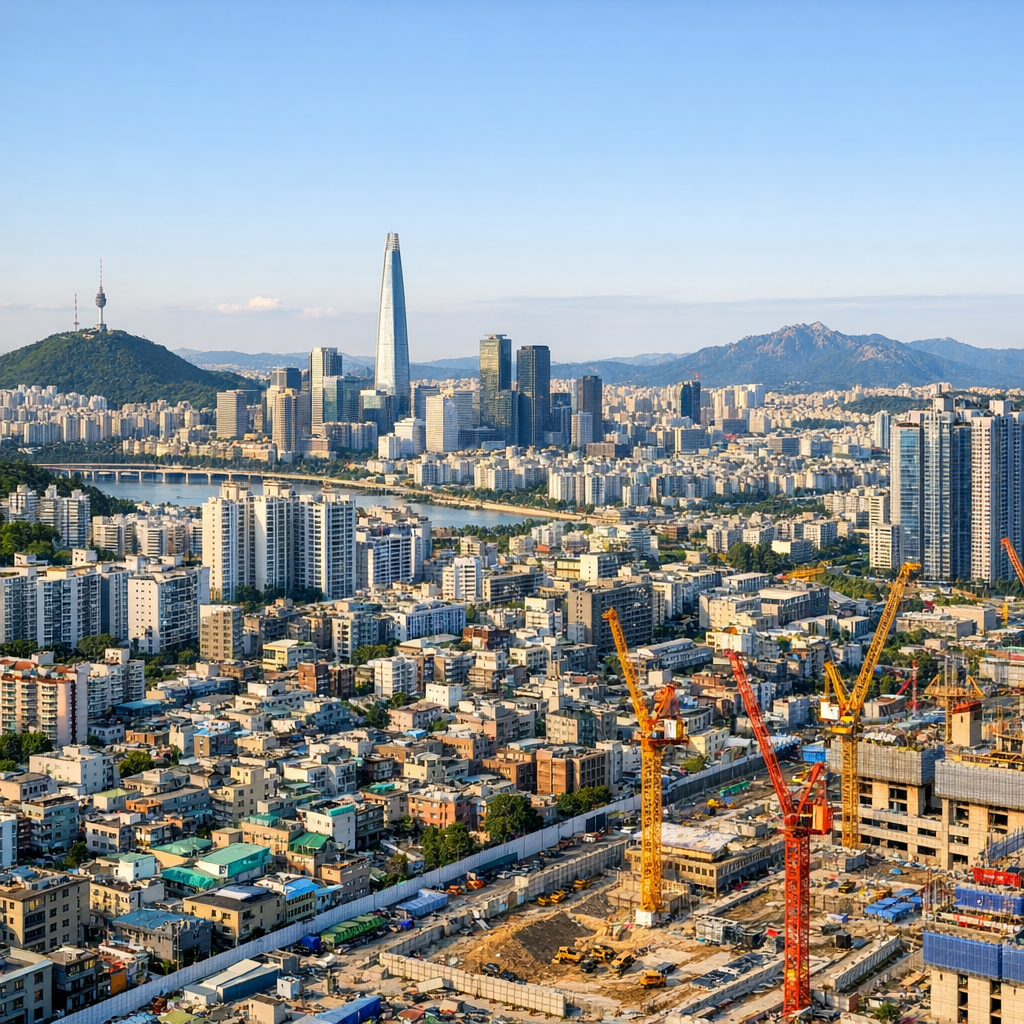
Seoul’s real estate market has experienced significant fluctuations in recent years, with notable variations across districts and ongoing development projects influencing the housing landscape.
Market Trends and District Disparities
In 2025, Seoul’s apartment prices saw an 8.98% annual increase, marking the highest rise in 19 years. This surge was particularly evident in districts like Songpa, which recorded a 20.92% increase, and Seongdong, with a 19.12% rise. Conversely, some areas experienced declines; for instance, Jongno District saw a 6% decrease in apartment prices, highlighting the widening gap between different parts of the city.
Rental Market Dynamics
The rental market has also been dynamic, with fluctuations in jeonse (lump-sum deposit) and monthly rent prices. Factors such as supply constraints, interest rate changes, and tenant demand have contributed to these shifts, affecting affordability and availability across various districts.
Upcoming Developments and Housing Supply
To address housing demand, the Korea Land & Housing Corporation (LH) is collaborating with private partners to develop idle sites in central Seoul, aiming to deliver approximately 3,100 new homes. Notable projects include the redevelopment of the Sungkyunkwan University baseball field and the Wirye office land, with construction expected to commence by 2027.
Conclusion
Seoul’s real estate market continues to evolve, influenced by district-specific trends, rental market dynamics, and proactive development initiatives. Prospective buyers and renters should stay informed about these changes to make well-informed decisions in this complex landscape.