

By So-hee Jin
Why Fitness in Seoul Goes Beyond the Physical
Seoul isn’t just bustling streets and high-rise offices—it’s also a city where health and wellness have woven themselves into daily life. Gyms and studios across the city are adapting to a growing demand for not only physical fitness but mental resilience. From stress-reducing yoga to high-intensity strength training, there are plenty of options to nurture both body and mind.
Types of Gyms and Studios You’ll Find
Budget and 24-Hour Chains
If you’re looking for something that works with a tight budget or odd work hours, chains like SpoAny, Fitness Factory, or Anytime Fitness offer 24-hour or early/late-night access. These often include basic weight and cardio equipment, sometimes without the frills.
Premium Clubs and Full-Service Sports Complexes
For more amenities—think swimming pools, saunas, multiple studios—you’ll find them in department store health clubs (like those in Shilla, Lotte, or Hyundai), luxury hotel fitness decks, and sports complexes such as Sports Monster in Gangnam. These tend to cost more monthly, but deliver far more features.
Boutique Studios and Mind-Body Practices
Yoga, Pilates, meditation, and fusion classes are flourishing, especially in Gangnam, Itaewon, Hongdae, and Apgujeong. Many studios blend traditional wellness principles with modern methods—offering shorter, focused classes for those with busy schedules.
Mental Health, Community & Exercise
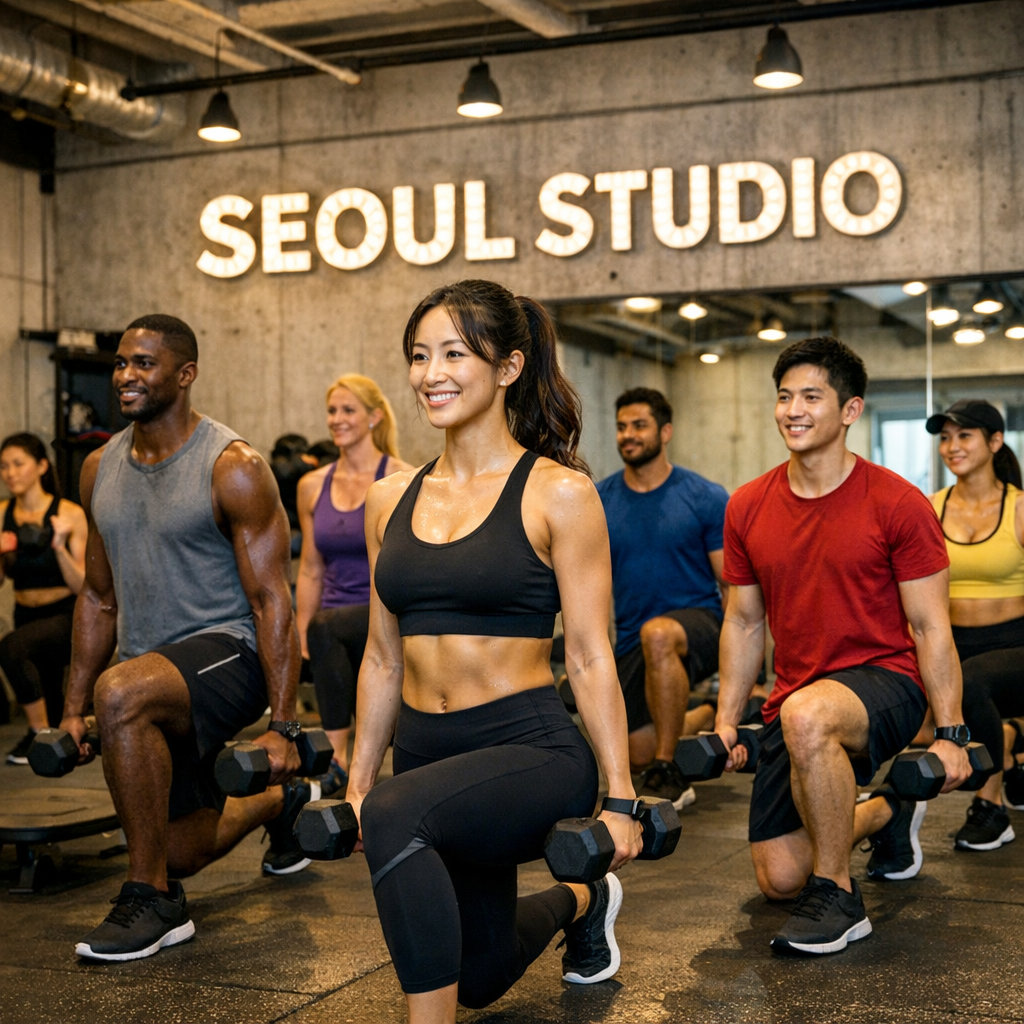
Physical activity isn’t just about strength or endurance—it’s one of the strongest tools for managing stress, improving mood, and supporting sleep. Group classes and strength sessions, in particular, offer social support and a sense of structure, both helpful for mental well-being.
How to Choose What’s Right for You
- Location & Schedule: Seoul’s districts vary widely—some areas like Gangnam and Itaewon offer more premium and English-friendly options; others offer better value. Think about transit time and when you’ll go.
- Membership vs Day Pass: If you’re new to a routine, try a day pass first. In many local gyms, these cost ₩10,000-₩30,000 depending on the area and facility. Monthly memberships and PT sessions tend to cost more, especially in premium gyms.
- Type of Training: Do you prefer weights, HIIT, functional training, yoga, meditation, or a mix? Match the gym type to your mental energy levels—yoga or calm stretching after a workday, high-intensity or strength workouts when you have more energy.
- Supportive Environment: English-friendly coaches, a welcoming community, variety in class types—all contribute to motivation. A positive gym culture can make a big difference.
Tips to Make Fitness Sustainable
- Start with realistic goals—three shorter sessions a week may be better than none.
- Balance movement and rest—resting is part of growth.
- Use mindfulness tools—yoga, breathwork, meditation—to support mental health alongside physical training.
- Mix it up—group classes, solo workouts, outdoor walks along the Han River—to avoid burnout.
- Track progress—small wins in strength, mood, sleep—more meaningful than chasing perfection.
Whether you’re a newcomer or someone returning after time away, Seoul offers a wide range of paths toward a healthier, more balanced life. Finding what fits your pace, your space, and your peace is what truly matters.