

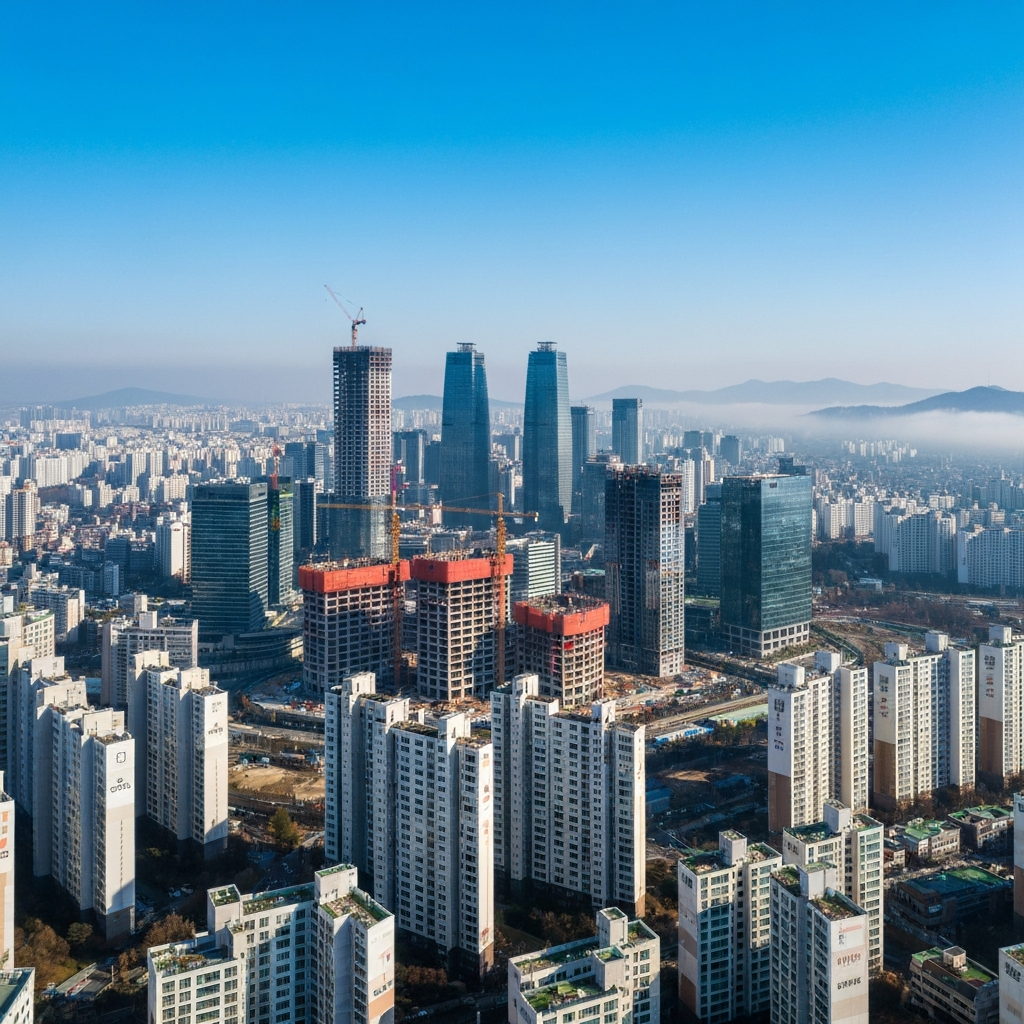
Seoul’s real estate market is experiencing notable shifts, with varying trends across different districts and ongoing development projects shaping the city’s housing landscape.
Fluctuating Apartment Prices
In recent months, apartment prices in Seoul have shown mixed patterns. Notably, the Gangnam, Seocho, and Songpa districts, traditionally among the most expensive areas, recorded slight declines in February 2026. According to the Korea Real Estate Board, Gangnam District saw a 0.06% drop, Seocho fell by 0.02%, and Songpa decreased by 0.03% during the fourth week of February. This marks the first decline in these districts in two years, signaling a potential cooling in these high-demand areas.
Conversely, the median price of apartments across Seoul has risen significantly. As of March 2026, the median price reached 1.2 billion won, a 4.35% increase from the previous month and over 200 million won higher than in March 2025. This surge is attributed to rotational buying patterns and supply concerns, with mid- to low-priced areas experiencing steeper effective increases.
Development Projects and Housing Supply
Several development initiatives are underway to address housing demand and modernize infrastructure. The Korea Land & Housing Corporation (LH) is collaborating with private partners to develop idle sites in central Seoul, aiming to deliver approximately 3,100 homes. Notable projects include the transformation of the Sungkyunkwan University baseball field and the Wirye office land, with construction expected to commence by 2027.
Additionally, the Seoul Metropolitan Government has approved projects to add 1,732 homes and modernize logistics hubs. These mixed-use redevelopment efforts span districts such as Yangcheon, Seongdong, and Jungnang, contributing to the city’s housing stock and infrastructure improvement.
Future Outlook
Looking ahead, the supply of new apartments in Seoul is projected to decline sharply, from approximately 31,856 units in 2025 to about 16,412 units in 2026—a nearly 50% decrease. This anticipated supply gap may intensify competition for existing homes, particularly those in desirable locations with favorable layouts.
In summary, Seoul’s real estate market is characterized by dynamic changes, with price fluctuations in various districts and proactive development projects aiming to meet housing needs. Prospective buyers and investors should stay informed about these trends to make well-informed decisions in this evolving landscape.