

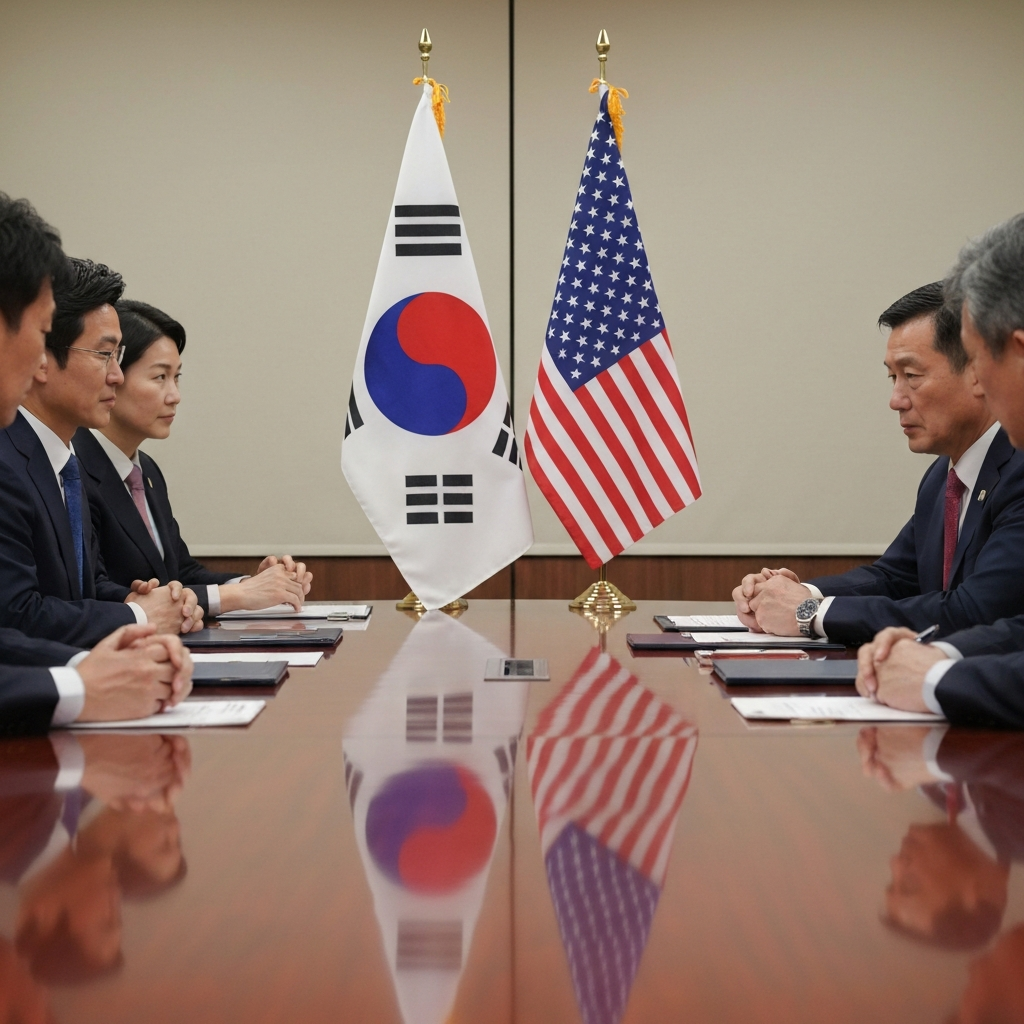
The trade relationship between South Korea and the United States has long been a cornerstone of our economic landscape. However, recent developments have introduced new challenges and opportunities that warrant close examination.
Recent Tariff Adjustments
In July 2025, the U.S. administration announced a 25% import tariff on all goods from South Korea, citing trade imbalances and protectionist policies. This sweeping measure affected various sectors, with the high-tech industry bearing significant impact due to our role as major global suppliers of memory chips, semiconductors, and advanced electronics. Companies like Samsung and SK hynix, key providers of DRAM and NAND chips, OLED panels, and lithium-ion batteries, faced increased costs and potential disruptions in supply chains.
Economic Implications
The Bank of Korea projected that these tariffs could reduce our economic growth by 0.45 percentage points in 2025 and 0.6 percentage points in 2026. The primary channels of impact include weakened trade, financial challenges, and increased uncertainties. Sectors such as steel, vehicles, and machinery are expected to be particularly affected.
Strategic Responses
In response to these challenges, our government has been actively seeking to diversify trade partnerships and reduce dependency on any single market. Efforts include negotiating new trade agreements and enhancing economic cooperation with other nations to mitigate the adverse effects of U.S. tariffs. Additionally, there is a concerted push to bolster domestic industries and encourage innovation to maintain our competitive edge in the global market.
Looking Ahead
While the current trade environment presents significant challenges, it also offers an opportunity for South Korea to reassess and strengthen its economic strategies. By focusing on diversification, innovation, and resilience, we can navigate these shifts and continue to thrive in the evolving global economy.